


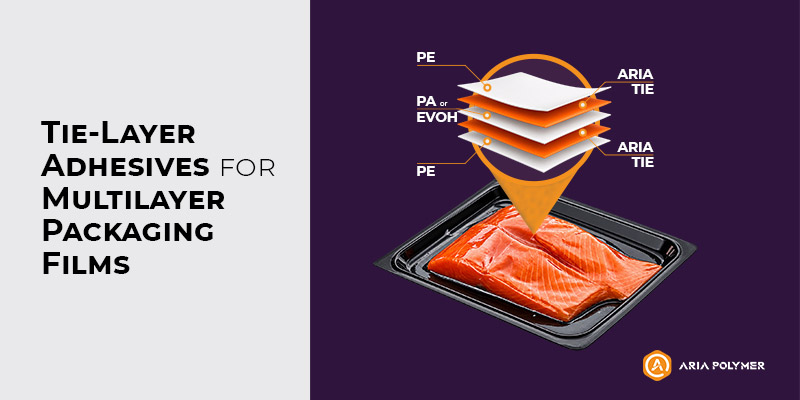
If you manufacture multilayer bottles and containers, one of the raw materials that most directly shapes final product quality is the tie layer adhesive. Barrier layers such as EVOH or polyamide (PA) do not bond to polyethylene or polypropylene on their own. Without a suitable adhesive resin between them, the container wall delaminates under impact, pressure and temperature swings, and the benefit of the barrier layer is lost. This article explains what a tie layer is, how it works, which adhesive types exist and what to check before you choose one.
What Are Multilayer Containers and Why Are They Made?
A multilayer container has a wall built from two or more polymer layers that are bonded together during molding, not laminated afterward. Normal handling cannot peel the layers apart.
The reason for this design is simple: no single low-cost polymer delivers strength, chemical resistance, an oxygen barrier and a low price at the same time. HDPE is tough and inexpensive, but it lets oxygen and solvents pass through. EVOH is an excellent oxygen barrier, but it is costly and loses performance once it absorbs moisture. Layering places each material only where it is needed, which is why the EVOH barrier layer is often just three to five percent of the wall thickness.
What Is a Tie Layer Adhesive?
A tie layer, also called an adhesive resin, is a specialty polymer placed between two incompatible polymers to bond them. The classic case is joining non-polar polyethylene to polar EVOH or PA.
Most tie layer resins are modified polyolefins:
- Maleic anhydride grafted polyethylene (PE-g-MA): for polyethylene-based structures
- Maleic anhydride grafted polypropylene (PP-g-MA): for polypropylene-based structures
- Ethylene vinyl acetate (EVA) copolymers: used in some adhesive formulations
These resins have a dual nature. Their polyolefin backbone is compatible with non-polar layers, while the maleic anhydride groups bond to polar polymers. That is what allows one very thin adhesive layer to join two completely different surfaces.
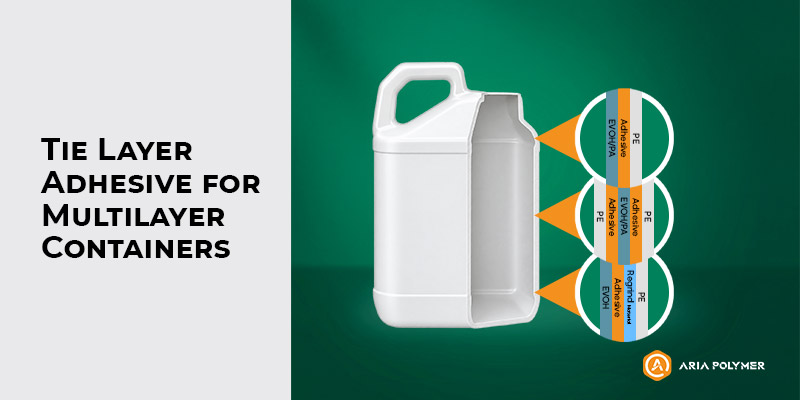
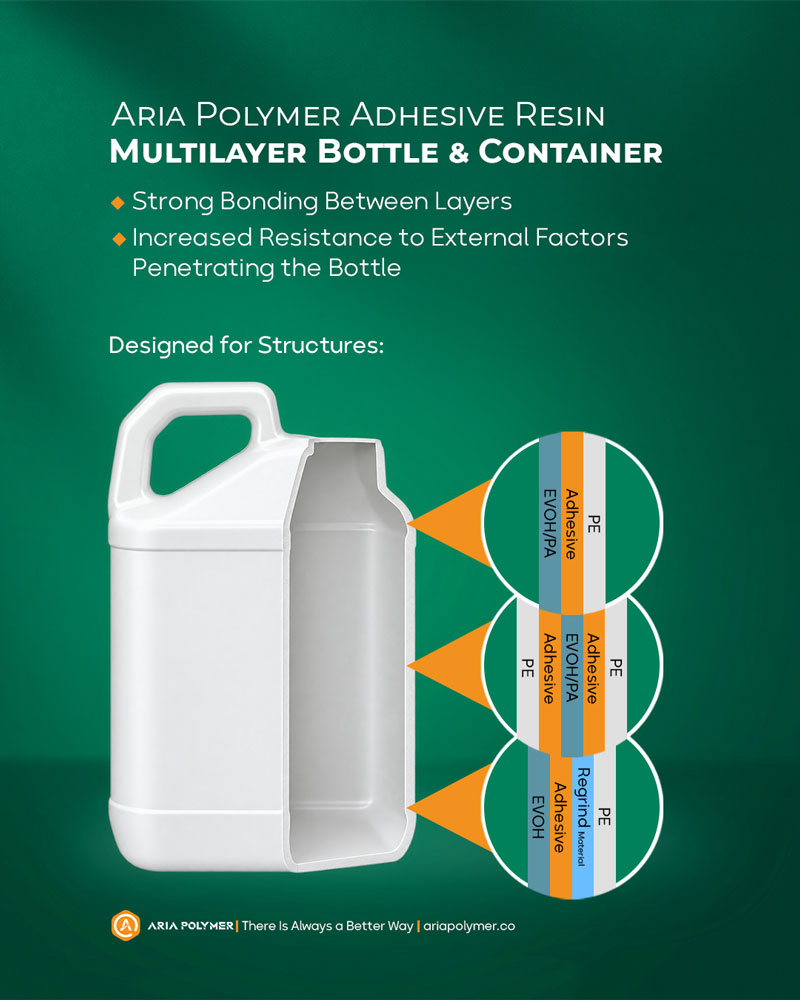
Typical Multilayer Bottle Structure
A common five-layer multilayer bottle structure, read from the product side outward, looks like this:
| Layer | Typical material | Function |
|---|---|---|
| Inner layer | HDPE or PP | Safe product contact and chemical compatibility |
| Tie-layer | Adhesive resin (PE-g-MA or PP-g-MA) | Bonds the barrier layer to the inner layer |
| Barrier layer | EVOH (or PA) | Blocks oxygen, moisture and aroma transfer |
| Tie-layer | Adhesive resin | Bonds the barrier layer to the outer layer |
| Outer layer | HDPE, sometimes with regrind | Mechanical strength and a printable surface |
The tie layer appears twice because the barrier layer must be bonded on both sides. EVOH is also always buried between hydrophobic layers so that moisture cannot weaken its barrier performance. Where regrind goes depends on the application. For sensitive products such as pharmaceuticals and food, it is usually kept away from the product-contact surface.
The Role of the Tie-Layer in Coextrusion Blow Molding
Multilayer containers are made by coextrusion blow molding. Several extruders, one per material, melt and meter their polymers and feed them into a shared die head. The die head forms the streams into a layered parison. The parison is then clamped in the mold and inflated, so the finished container comes out in a single cycle with no secondary operation.
The tie-layer resin is normally fed by its own extruder and runs as a thin layer between the main polymer streams. Because bonding happens in the melt, the adhesion forms at the molecular level instead of being only mechanical, and the wall behaves like one material. Layer order and thickness are controlled by the die geometry and the relative output of each extruder.
Benefits of the Right Tie-Layer Adhesive for Multilayer Containers
Choosing the correct adhesive resin has practical results on the production floor and in the field:
- Resistance to delamination when the bottle is squeezed, dropped or exposed to thermal cycling
- Preserved oxygen and moisture barrier performance, which extends product shelf life
- Better mechanical strength of the container wall
- Process stability on high-speed production lines, with less scrap
- Efficient use of expensive barrier resins such as EVOH, since a thin layer works fully only when it is properly bonded
Types of Adhesives Used with Multilayer Containers
Several adhesive families exist in plastics packaging, but only one is the standard for in-line multilayer bottle production:
| Adhesive type | Typical use | Suitability for in-line multilayer bottle production |
|---|---|---|
| Tie layer resins (adhesive resins) | Coextruded between the main layers | Excellent; the industry standard |
| Hot melt adhesives | Bonding pre-formed layers, spot repairs | Limited, niche use |
| Solvent-based adhesives | Bonding similar plastics, manual assembly | Limited, because of environmental and health concerns |
| Reactive adhesives (polyurethane, epoxy) | Specialty films and inserts, high chemical or heat resistance | Poor fit for fast lines because of slow curing and handling needs |
For mass production of multilayer bottles and containers, tie-layer resins are therefore the primary choice.
How to Choose a Tie-Layer Adhesive for Multilayer Containers
Check these points before buying or switching an adhesive resin:
| Factor | What to consider |
|---|---|
| Polymer compatibility | The resin must bond the exact polymer pair in your structure (for example HDPE and EVOH) |
| Processing temperature | It must suit the melt temperatures of the other layers in coextrusion |
| Barrier properties | It should not weaken oxygen or moisture barrier performance |
| Mechanical strength | The bond must resist delamination throughout the container’s service life |
| Regulatory compliance | Food and pharmaceutical packaging need the right approvals |
| Cost and availability | The resin must be economical and reliably supplied at production volumes |
In practice, run trials and bond-strength tests on your real layer structure before committing to large volumes, and match the resin datasheet to your line conditions.
Applications of Multilayer Containers
- Pharmaceuticals: syrups, oral liquids and oxidation-sensitive nutraceuticals
- Agrochemicals: liquid pesticides and fertilizers with aromatic solvents that permeate plain HDPE
- Food and beverage: edible oils, sauces and syrups, where oxygen barrier performance delays rancidity
- Cosmetics and personal care: fragrance retention
- Industrial chemicals: solvents, thinners and cleaners that call for chemical resistant bottles
- Household products: cleaners, insecticides and air care products that must keep their scent strength
In every one of these uses, a weak bond between layers undermines even the best barrier layer.
ARIA polymer tie-layer adhesive
Our tie layer adhesive is a maleic anhydride grafted polyolefin adhesive resin designed for coextrusion between polyethylene layers and barrier layers. Our technical team can help you select the layer structure and tune the resin for your production line.
ARIA POLYMER
Aria Polymer is a manufacturer of various polymer additives, including additive masterbatches, compatibilizers, and tie layer adhesives. For orders, price inquiries, technical consultation, and more, please get in touch with us through the contact options available on our Contact Us page.