


Walk through any supermarket and you will be surrounded by multilayer packaging without ever noticing it! Vacuum-sealed meat trays, shrink-wrapped sausages, juice cartons, coffee capsules, and cosmetic tubes all rely on structures that combine several different plastics and sometimes paper, into a single package. Each material contributes a specific function, whether it’s strength, flexibility, printability, or protection against oxygen and moisture. The challenge is that these materials are often chemically incompatible and won’t bond to each other on their own. Tie-layer adhesive resin solves this problem, acting as the critical link that holds multilayer packaging together. This article explains what tie resin is, why it matters, and where it’s used across the packaging industry, along with Aria Polymer grades available to meet these needs.
What Is a Tie-Layer Adhesive Resin?
In modern multilayer packaging, different plastic materials rarely bond to one another on their own. Polyethylene (PE) will not naturally adhere to EVOH or polyamide (PA), yet many of today’s most demanding packaging applications rely on exactly this kind of combination, a barrier layer sandwiched between structural PE layers. This is where tie-layer adhesive resin (also called tie resin) comes in. Functioning as a molecular “glue” between chemically dissimilar polymers, tie resin allows manufacturers to co-extrude structures that combine the strength and moisture resistance of polyolefins with the oxygen-barrier properties of EVOH or PA, without delamination, leaks, or structural failure.
Why Tie Resins Matter in Multilayer Packaging
Food safety, shelf-life extension, and product protection all depend on packaging structures that keep oxygen, moisture, and aroma where they belong. A typical high-barrier film might be built as EVOH / Tie / PE / Tie / EVOH, five layers working together, but only possible because the tie layer bridges the incompatible polymers on either side. Without a reliable adhesive resin, these layers would simply peel apart during processing or in use, defeating the purpose of the barrier structure altogether.
Because tie-layer performance directly affects seal integrity, barrier retention, and overall package durability, resin selection is a critical engineering decision, not an afterthought.
Key Applications of Tie Resin
Tie-Layer adhesive resins are used in different types of packagings such as:
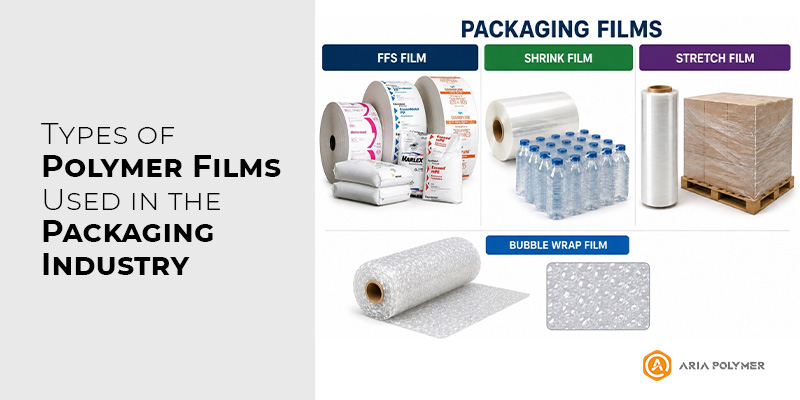
Flexible Packaging Film
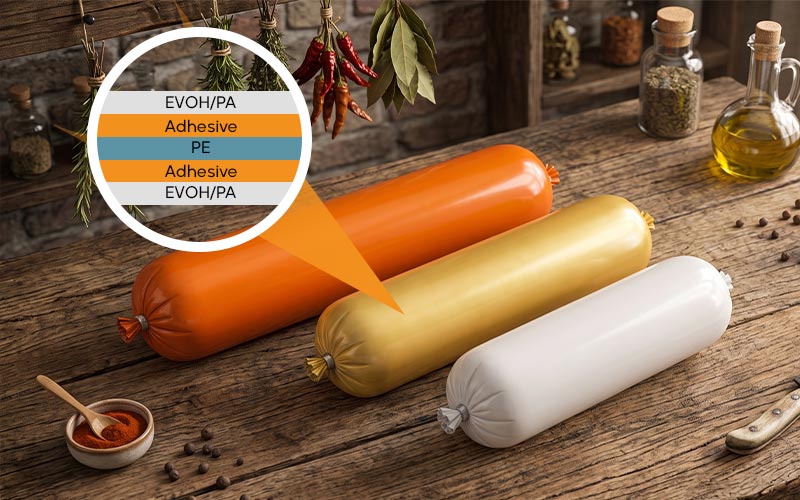
Oxygen-barrier multilayer films are essential for meat, cheese, and dairy packaging, where freshness and shelf life are paramount. Tie resins enable structures such as PE / Tie / EVOH or PA / Tie / PE, produced through blown film or cast film co-extrusion, for use in:
- Meat and cheese vacuum film
- Lidding film for dairy and food trays
- Sausage casings and shrink bags for meat
- Highly transparent, high-barrier skin film
These structures are typically built using bi-oriented film or double- and triple-bubble co-extrusion processes, all of which depend on a tie resin capable of withstanding stretching and thermal stress while maintaining bond strength.
Rigid Packaging
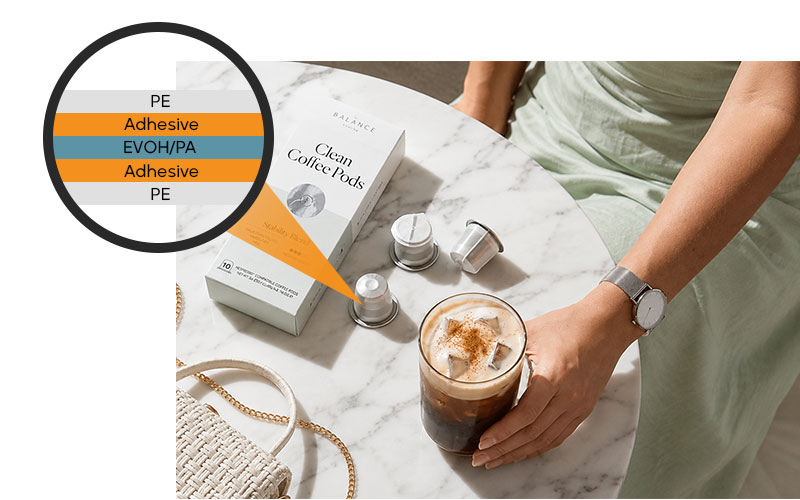
Multilayer bottles and containers, from agrochemical bottles to milk and juice packaging, use co-extrusion blow molding or co-injection molding to combine PE’s toughness with EVOH’s gas-barrier performance. Tie resin is equally vital in:
- Food trays and thin-wall containers formed by thermoforming
- Coffee capsules requiring oxygen and aroma barriers
- Pharmaceutical and agrochemical bottles where product integrity is non-negotiable
Coating and Lamination
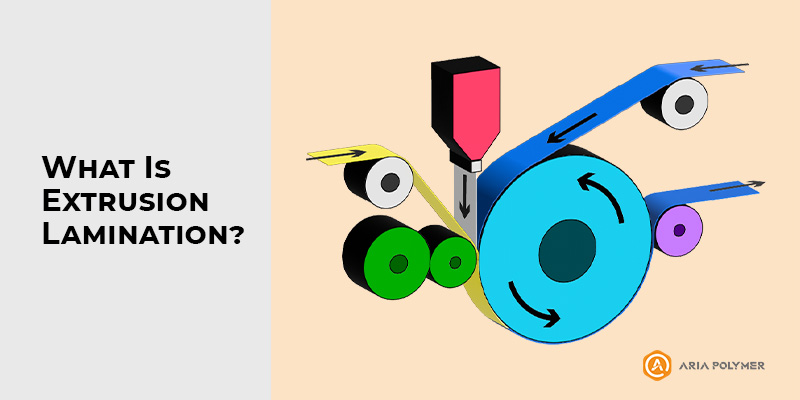
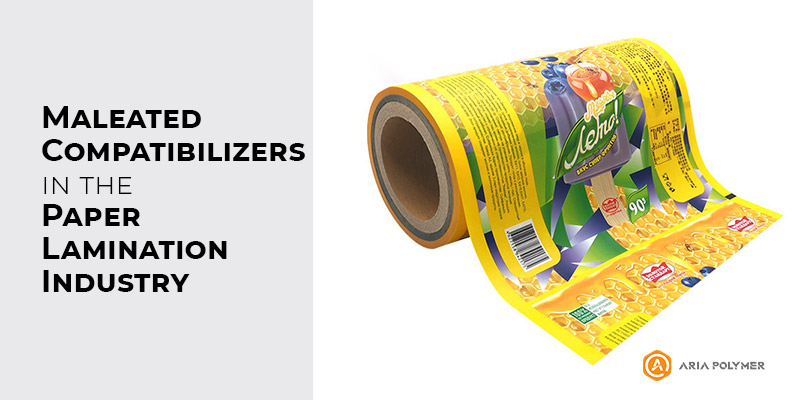
Paper-based liquid cartons, used for milk, juice, and other beverages, rely on extrusion coating and extrusion lamination to fuse paper, PE, and EVOH or PA into a single laminated structure. Tie resin holds these dissimilar materials together across demanding processes such as:
- Paper extrusion coating
- Aseptic and hot-fill liquid carton production
- Pharmaceutical secondary packaging lamination
Flexible Tube Packaging
Cosmetic and food-industry tubes are increasingly built as multilayer structures (PE / Tie / EVOH or PA / Tie / PE) produced via tube co-extrusion, giving brands a barrier-protected, squeezable format without sacrificing product shelf life.
Choosing the Right Tie Resin Grade
Not all tie resins are created equal, the correct grade depends on the base polymers being bonded, the process (blown film, cast film, blow molding, coating, or tube extrusion), and whether a ready-to-use or concentrated format is preferred. As a supplier in this space, Aria Polymer offers a range of tie-resin grades engineered for these exact use cases, including:
- 4100T250: Ready-to-use grade for flexible film, rigid bottles/containers, laminated packaging, and multilayer tubes
- 4100T371: Ready-to-use grade optimized for sausage casing, shrink bags, and high-barrier skin film
- 4100T315: Ready-to-use (eco) grade for rigid containers and flexible tube packaging
- 1196T233: Concentrated grade for flexible film, rigid packaging, and multilayer tube applications
Selecting between ready-to-use and concentrated formats allows manufacturers to balance dosing flexibility, cost efficiency, and processing requirements across different production lines
The Business Case for Reliable Tie-Layer Adhesion
Poor interlayer adhesion leads to costly problems: delamination during transport, barrier failure that shortens shelf life, and increased scrap rates on the production line. Investing in a well-matched tie resin is not just a technical formality, it’s a direct lever on product quality, food safety compliance, and manufacturing efficiency. For brand owners working across meat and dairy packaging, agrochemical containers, beverage cartons, or cosmetic tubes, the tie layer is a small fraction of total material volume but an outsized factor in package performance.
Aria Polymer
Aria Polymer is a manufacturer of various polymer additives, including additive masterbatches, compatibilizers, and tie layer adhesives. For orders, price inquiries, technical consultation, and more, please get in touch with us through the contact options available on our Contact Us page.
Stay informed about the latest Aria Polymer’s products by following our LinkedIn page.